On February 25, 2026, the eighth day of the first lunar month, Qifeng Village in Fengyu Town, Eryuan County, Dali Bai Autonomous Prefecture, Yunnan Province, revived its traditional folk event Chunwang Zhengyue (春王正月, “Spring King of the First Lunar Month” celebration)—a full forty years after it was last held.
Chunwang Zhengyue is a village-specific celebration unique to Qifeng Village, deeply rooted in the Bai people’s Benzhu belief system, a traditional religion centered on the worship of village guardian deities. Those venerated as Benzhu may be revered ancestors, heroes, or natural spirits believed to protect the village and ensure its prosperity and well-being. The tradition of Chunwang Zhengyue originated from the Zhang family, who were honored with the local title of “Three Generations of Male Officials” for producing three generations of high-ranking imperial officials. This historical legacy is reflected in the event’s central theme: the reenactment of a county magistrate adjudicating civil disputes.
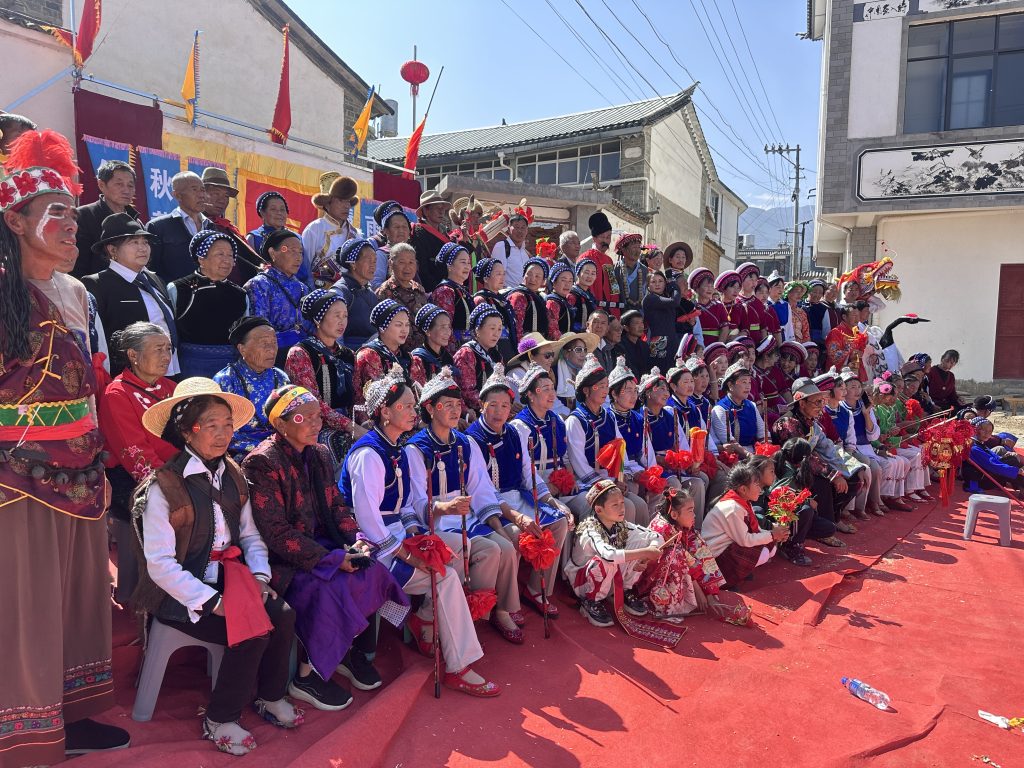
(Photo by Tingting Tang, February 24, 2026)
The last time Chunwang Zhengyue was held was in 1986. After forty years of silence, it has now been revived—thanks largely to the efforts of several elderly villagers who had participated in the event in their youth. Though all are now in their seventies, they remain committed to preserving this unique tradition. Among them are Zhang Shoupei (张寿培), Yang Jifan (杨吉繁), and Wang Bingcui (王炳翠), who once played key roles in the event. Now 88 years old (born 1939), Zhang Shoupei is not only the only person in the village who still fully recalls the event’s structure and content, but also an artist who has received multiple international and national awards for his craftsmanship. Since 2000, he had been working to document the Chunwang Zhengyue program from memory and in writing.
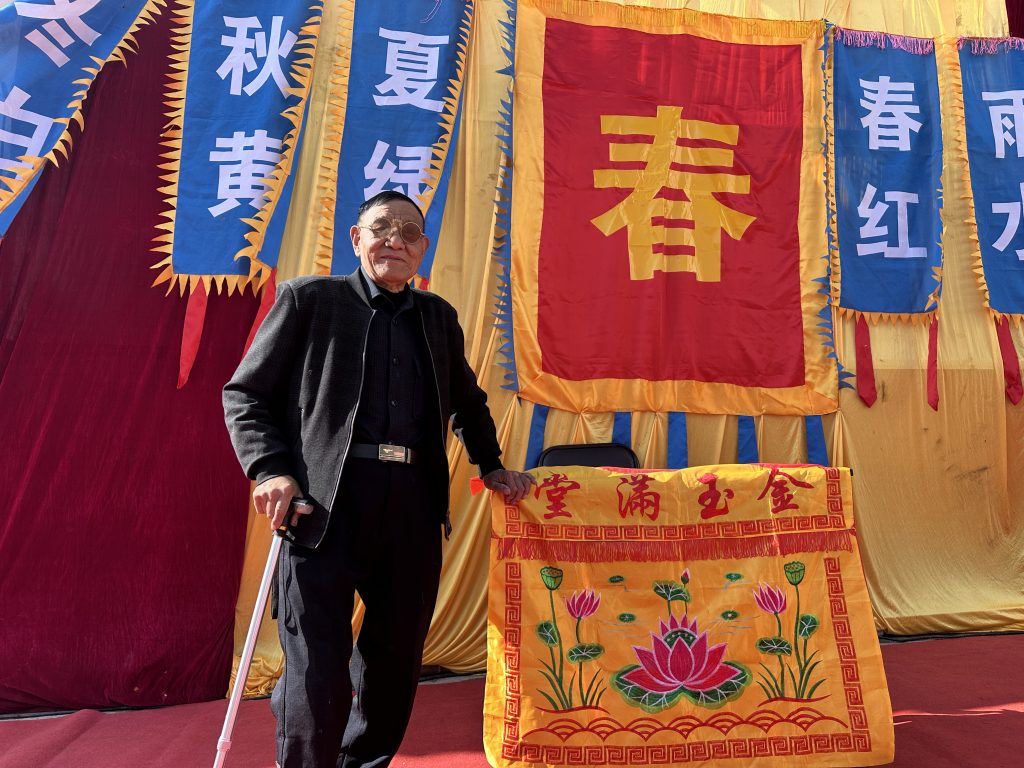
(Photo by Tingting Tang, February 24, 2026)
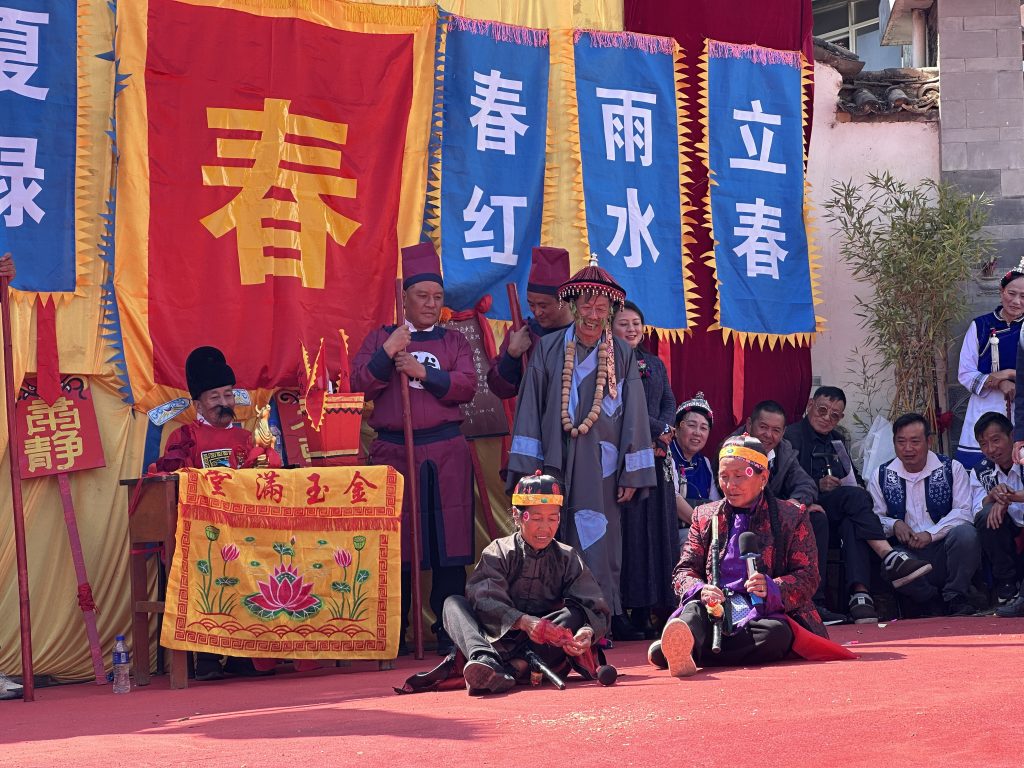
(Photo by Tingting Tang, February 24, 2026)
In November 2025, with the initiative led by Wang Bingcui and support from the ECura project, preparations for the first revival of Chunwang Zhengyue officially began. Zhang Shoupei, drawing on oral accounts and his own written notes, reconstructed the entire performance process and the scripted segments of the event.
At 10 a.m. on February 25, 2026, the revival celebration began. The event lasted over four hours and drew villagers from Qifeng and neighboring communities. It consisted of two parts: a village procession (characterized by impromptu performances) and a staged program (featuring scripted performances). Laughter and joy filled the event, vividly reflecting the community’s initiative and enthusiasm in organizing and promoting their own cultural heritage.
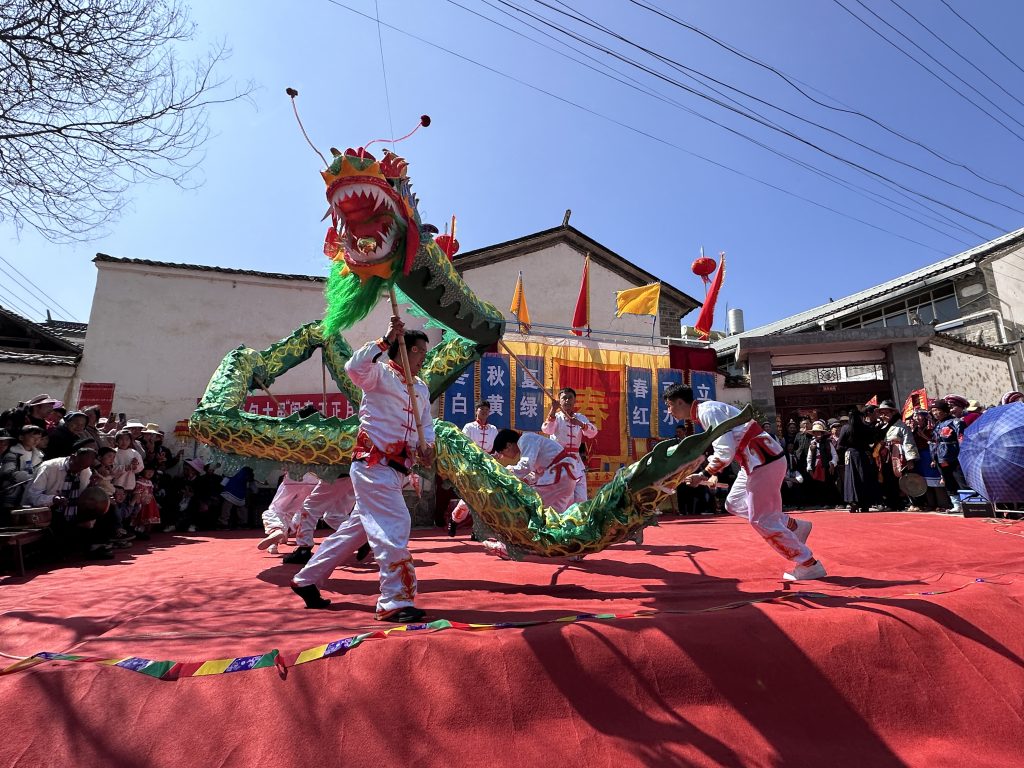
(Photo by Tingting Tang, February 24, 2026)
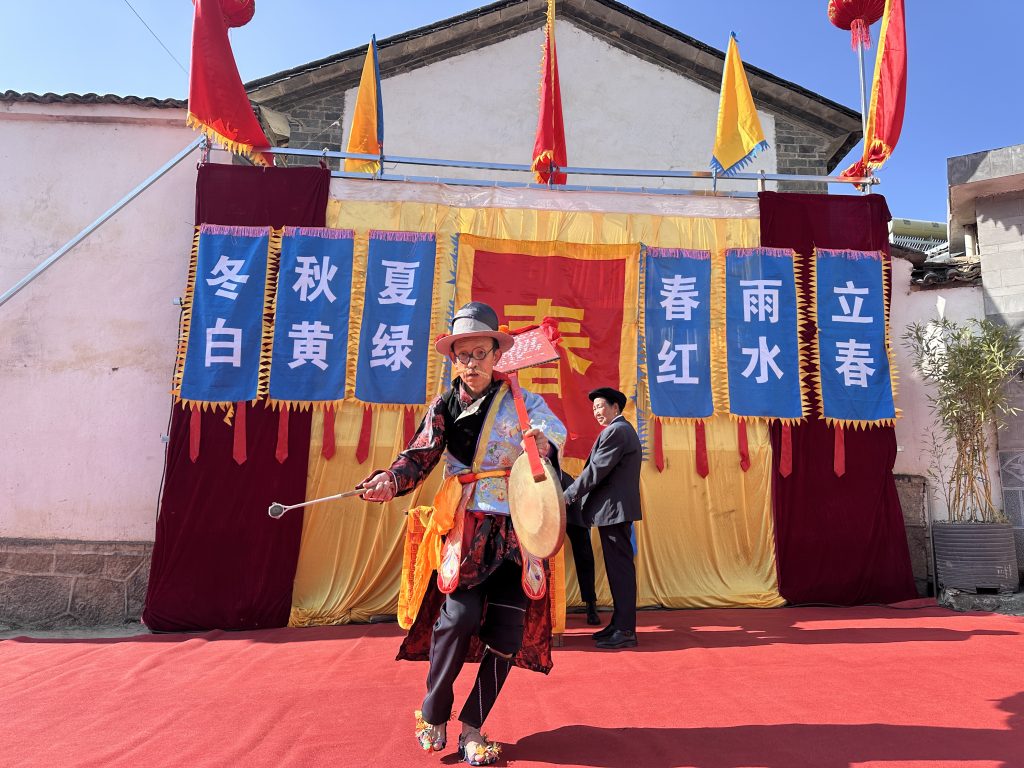
(Photo by Tingting Tang, February 24, 2026)
This revival also embodies the core philosophy of the ECura project: “empowering local people—everyone is a curator.” From preparation to the successful event, Dr. Tingting Tang, Postdoctoral Researcher with ECura, and Yalun Yang, PhD student in ethnomusicology at University College Cork, participated in and documented this historic moment.
Written by Tingting Tang | Photos by Tingting Tang | March 31, 2026
A Glimpse into Qifeng Village’s Chunwang Zhengyue (春王正月) celebration (meaning Spring King of the First Lunar Month).
(Video by Tingting Tang, Feb 24, 2026.)
“春王正月”时隔四十年在白族起凤村复兴
2026年2月25日,农历大年初八,云南省大理白族自治州洱源县凤羽镇起凤村迎来了“春王正月”传统民俗活动的复兴。这一天,距离这项活动上一次举办,已经整整过去了四十年。
“春王正月”是起凤村独有的村落娱乐活动,根植于白族传统的“本主”信仰之中。白族“本主”信仰以村寨守护神崇拜为核心,被尊奉为“本主”的,或是值得敬仰的祖先、英雄,或是被认为能庇佑村庄风调雨顺、繁荣昌盛的自然神灵。起凤村的“春王正月”正源于本村张氏家族的“本主”崇拜。张氏家族曾先后培养出三代在中央王朝担任显要官职的人物,当地称之为“三代男官”,这一历史渊源也赋予“春王正月”独特的底色——活动的主要内容,便是模仿县官审理世俗纠纷。
1986年,“春王正月”最后一次举办,此后便沉寂了四十年。值得庆幸的是,几位当年曾亲身参与活动的老人,如今虽已年过七旬,却依然怀抱着将这一独特传统延续下去的信念。他们当中,有曾担任主要角色的张寿培、杨吉繁、王炳翠等人。如今88岁的张寿培(生于1939年),不仅是村中唯一能完整记得活动流程与内容的老人,更是一位曾荣获多项国际及中国工艺美术大奖的艺术家。从2000年起,他便着手回忆并撰写“春王正月”的活动大纲。
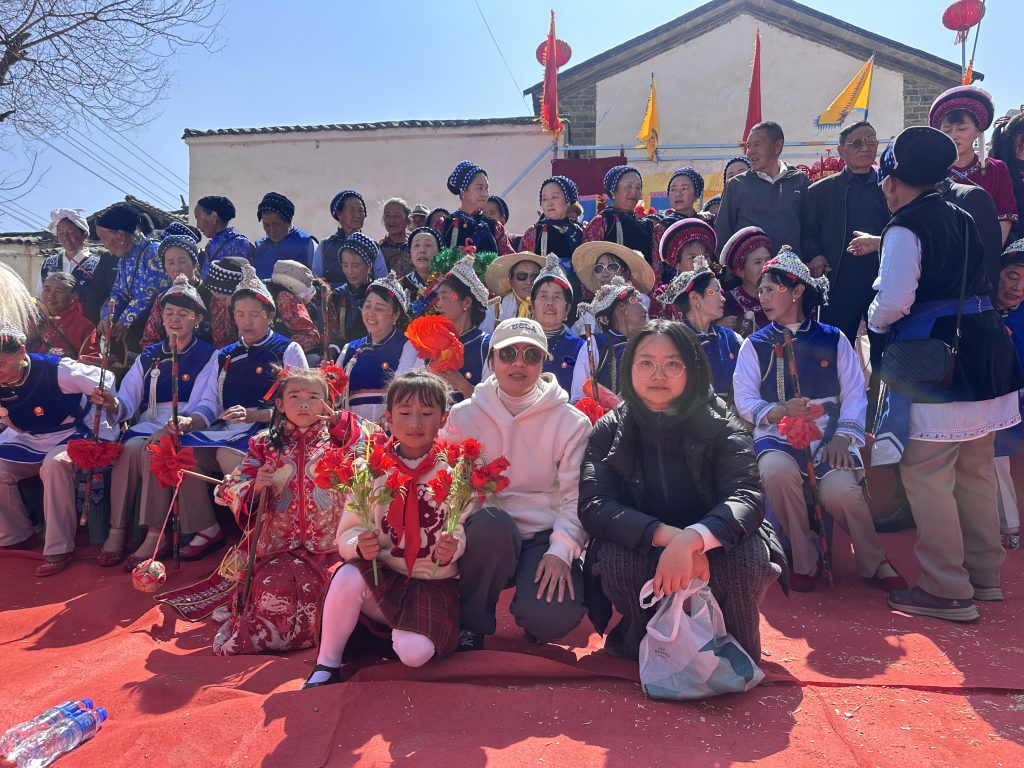
(Photo courtesy of an anonymous villager, February 24, 2026)
2026年11月,在王炳翠的主动发起和ECura项目的支持下,“春王正月”第一届复兴活动正式启动筹备。张寿培通过口述结合亲笔撰写的方式,重新编排了整套演出流程及固定节目的剧本台词。
2026年2月24日上午10时,复兴活动正式拉开帷幕。整个活动持续四个多小时,吸引了本村及周边村落的男女老少前来观看。活动由“游村”(以即兴表演为主)和“舞台展演”(以固定台词节目为主)两部分组成,台上台下欢声笑语,充分展现了文化持有者自发组织、参与和传播传统文化的热情与活力。
这也是ECura项目核心理念——“赋权于民,人人皆是策展人”(empowering local people, everyone is a curator)的生动体现。从活动筹备到正式举办,ECura项目博士后研究员唐婷婷博士与科克大学民族音乐学博士研究生杨雅伦全程参与、协助并记录了这一具有历史意义的时刻。
(图/文:唐婷婷,2026年3月31日)