
ECura’s Collaboration with Qifeng Village
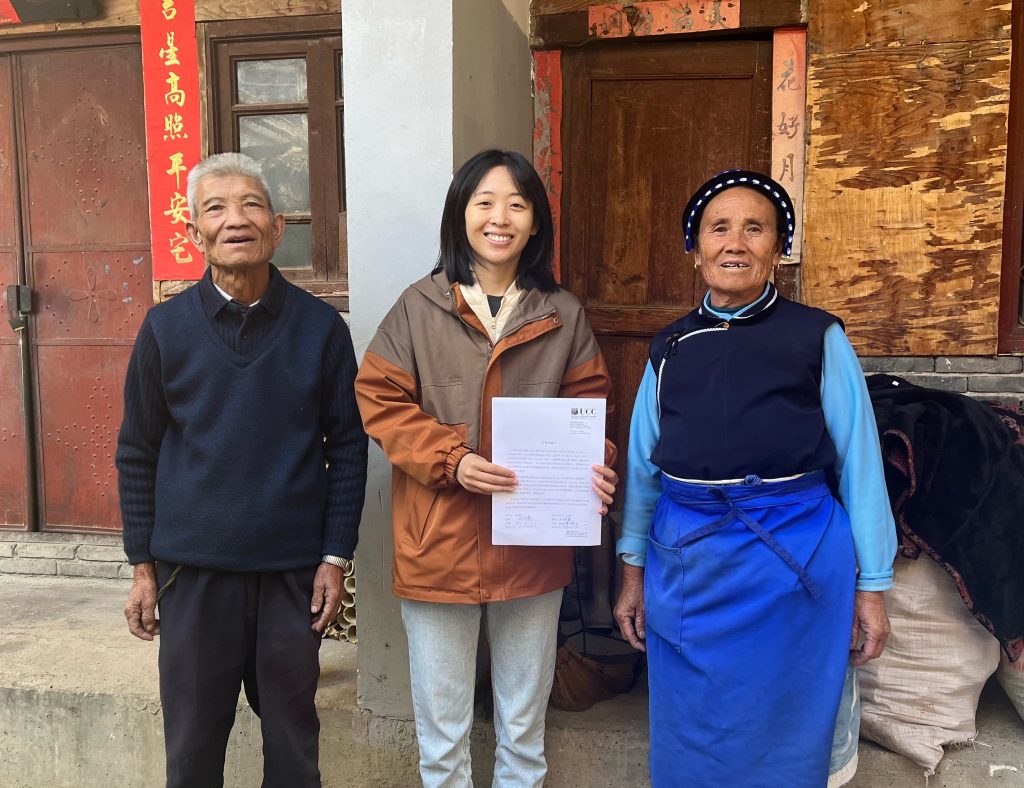
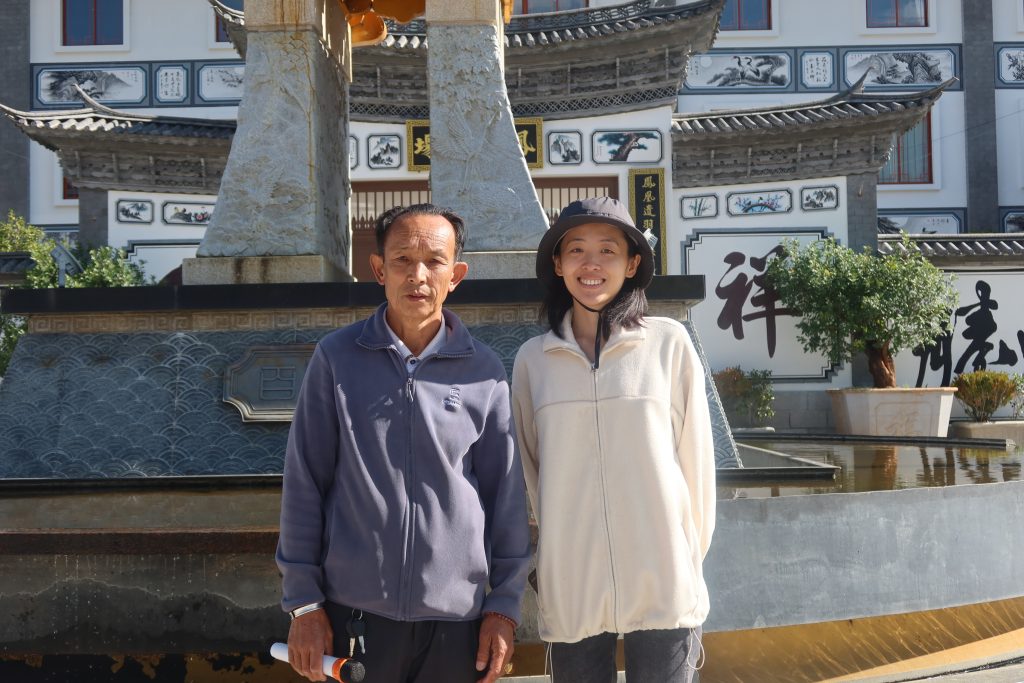
Researcher Keyi Liu, on behalf of the ECura project team, signed a cooperation agreement with the community leaders of Qifeng Village at the end of November 2023 and established the Qifeng Village Folk Music Rescue Fund. Starting from August 2023, Keyi Liu conducted a three-month field investigation in Qifeng Village. After a thorough understanding of the village, she identified three community leaders for collaboration with the ECura project: Wang Bingcui, Zhang Zhongming, and Yang Jifan. Keyi Liu had multiple discussions with these leaders and village representatives about the details of the collaboration. The villagers unanimously agreed to use the fund to sponsor activities related to the preservation of Bai ethnic music and dance, thus encouraging greater participation in traditional music activities. During the fieldwork, Keyi Liu held several workshops teaching middle-aged and elderly villagers how to record short videos with smartphones and upload them to social platforms.
研究员刘可意代表ECura项目组于2023年11月底与起凤村的社区负责人签订了合作协议,并设立了起凤村民间音乐救助基金。自2023年8月起,刘可意在起凤村进行了为期三个月的田野调查,深入了解村情后,确定了三位与ECura项目合作的“社区负责人”:王炳翠、张仲明和杨吉繁。刘可意与这三位负责人及村民代表们就合作的细节进行了多次讨论。村民们一致同意使用基金赞助保护白族音乐和舞蹈的相关活动,以此鼓励大家更加积极地参与传统音乐活动。在田野调查期间,刘可意举办了多个工作坊,指导中老年村民如何使用智能手机拍摄视频并将其上传到社交平台。
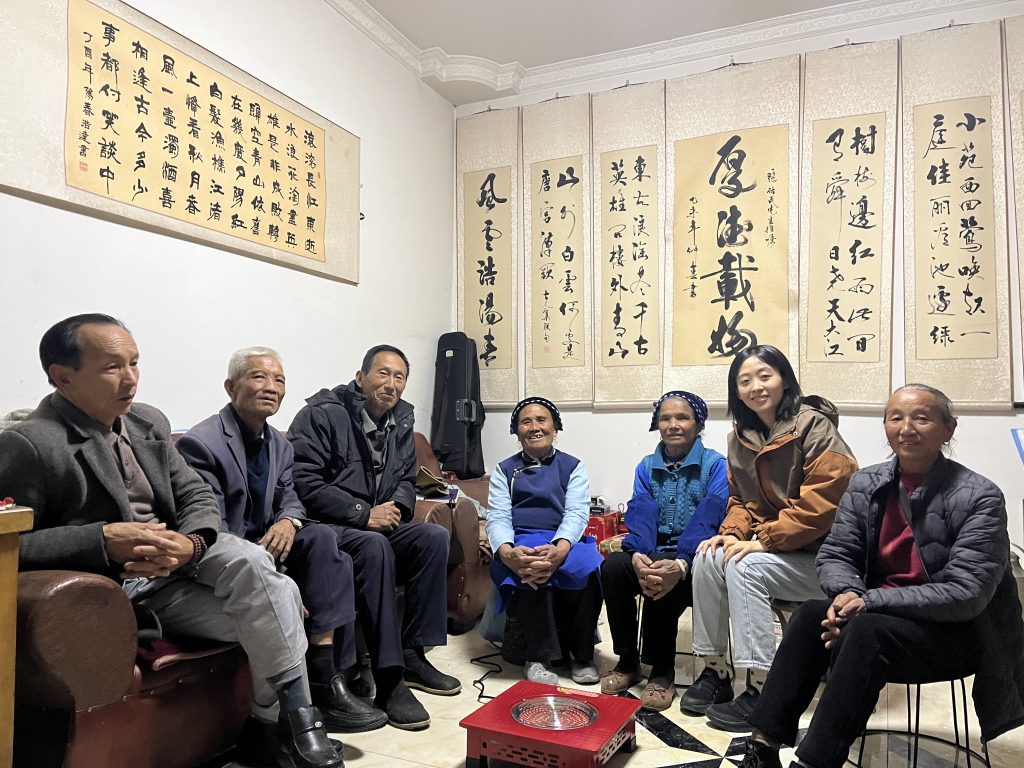
Bai villagers discuss the collaboration agreement with ECura
Collective Decision-Making is the preferred approach within the Qifeng village, characterized by spontaneously organized gatherings that discuss various community affairs, fostering strong community cohesion.
The ECura team respected this communal tradition by actively participating in these local decision-making processes. During fieldwork, researcher Keyi Liu, along with three community leaders and other villagers, held multiple discussions concerning the details of the collaboration.
The villagers showed considerable interest and support for the ECura project, appreciating the subsidies provided for community leader roles. Guided by principles of equality, voluntary participation, and shared responsibility, a consensus was reached to allocate these subsidies to support activities related to music and dance, as well as cultural revival efforts. This allocation aims to boost the villagers’ participation and enthusiasm in Bai ethnic music activities, thereby enriching the community’s cultural engagement.
在起凤村,集体决策是一种广受喜爱的方式,其特点是由村民们自发组织聚会以讨论各类社区事务,进而培养坚实的社区凝聚力。
ECura团队充分尊重这一社区传统,积极参与当地的决策过程。在田野调查期间,刘可意研究员与三位社区领导及其他村民们就项目合作细节进行了多次讨论。
村民们对ECura项目表现出极大的兴趣与支持,并对为社区领导者提供的补贴表示感谢。遵循平等、自愿参与、责任共担的原则,各方达成共识,将这些补贴用于支持与音乐和舞蹈相关的活动,以及文化复兴工作。这笔拨款旨在提升村民们对白族音乐活动的参与度与热情,从而丰富社区的文化参与。

ECura Collaborates with Community at the 2025 Bai Agriculture Festival
On May 19, 2025, Qifeng Village in Fengyu Town, Eryuan County, Dali Prefecture, Yunnan Province, celebrated its annual Traditional Kai Yang Men (Rice-Planting Festival). Organized spontaneously by the local villagers and supported by the ECura project, the event aims to preserve the Bai ethnic group’s agricultural heritage while praying for favorable weather and bountiful harvests. Since 2018, when ECura project PI Lijuan Qian first participated, this tradition has been maintained and grown significantly. This year’s festival was notably vibrant and grand, attracting numerous participants and villagers from surrounding villages. ECura project postdoctoral researcher Keyi Liu also traveled to the site this time and actively participated throughout the festival’s preparations, rehearsals, and the event itself.
On the day of the event, the rice-planting flag fluttered in the wind, accompanied by the sounds of suona horns, drums, and gongs echoing through the village. Dressed in festive attire, villagers of all ages gathered to sing and dance in celebration. A solemn ritual honoring the “Seedling Flag” unfolded at the heart of the ceremony. In front of the flag, a respected elder (villager Jifan Yang 杨吉繁) recited traditional verses before handing over a copper gong—symbolizing the authority to begin planting—to the designated Seedling Officer. Holding the gong, the Seedling Officer declared: “May this year bring a bountiful harvest and granaries full of grain!” He then struck the gong and announced loudly, “The gate of rice planting is now open!” In response, the crowd echoed back, “Let’s go!” Amid the sounds of firecrackers, gongs, and the festive melody of rice-planting tune played on suona, a procession of hundreds set out with the flag leading the way. Singing and playing music as they paraded through the village lanes toward the fields.
The villagers demonstrated remarkable dedication and creativity throughout both the preparation and the performance stages. In the weeks leading up to the event, they handcrafted an impressive array of traditional props. These included intricately woven willow-leaf dragons, symbolic rice-planting flags, brightly colored ethnic costumes, lifelike buffalo outfits that honored the animal’s role in farming, and hand-made straw sandals. Each element reflected the community’s deep cultural memory and pride, turning the entire event into a vivid expression of Bai identity.


A particularly special aspect of this year’s festival was the temporary stage constructed by the villagers beside the rice fields—an open-air platform framed by mountains and sky. Here, villagers of all ages presented carefully choreographed performances of traditional song and dance, honoring the rhythms of planting and community life.As one villager Bingcui Wang (王炳翠) explained, “The more joyful and lively the fieldwork, and the more beautifully the planting songs are sung, the better the rice will grow—and the bigger the harvest will be.” A particularly special aspect of this year’s festival was the temporary stage constructed by the villagers beside the rice fields—an open-air platform framed by mountains and sky. Here, villagers of all ages presented carefully choreographed performances of traditional song and dance, honoring the rhythms of planting and community life.As one villager Bingcui Wang (王炳翠) explained, “The more joyful and lively the fieldwork, and the more beautifully the planting songs are sung, the better the rice will grow—and the bigger the harvest will be.”

The director of the Eryuan County Intangible Cultural Heritage Protection Center, who attended the festival, praised it as an exemplary model of grassroots cultural revival. He noted the event’s significant role in preserving traditional agricultural rituals and emphasized its dynamic and innovative spirit. In addition, villagers documented the entire festival digitally, producing video recordings that serve as valuable cultural records for future generations.
Kai Yang Men vividly showcases the Bai people’s profound reverence for nature and their zest for life. Through this vibrant celebration, Qifeng Village strengthens community bonds, actively promotes traditional cultural practices, and contributes to the sustainable cultural development of the rural area.
Crowdsourced Database Recording Community Culture
The videos below are a curated selection filmed and shared by the villagers themselves, showcasing their gatherings for daily, festivals, and religious music practices. The villagers suggest sharing the video under the name of Qifeng village, indicating their common interest in protecting the copyright of their indigenous ethnic music. The quality of the uploaded videos states that they are compressed due to the permitted loading sizes. If viewers wish to see the original-sized videos, please contact the ECura research team.
以下视频由村民们拍摄并分享,展示了他们在日常邻里生活、节日庆典以及宗教仪式中的音乐实践。起凤村的村民们提议将上传的视频以“起凤村“命名,视频的版权归起凤村的所有村民。上传的视频因平台的容量限制有一定程度的压缩,如果您想观看原视频,请联系ECura的研究团队。
